
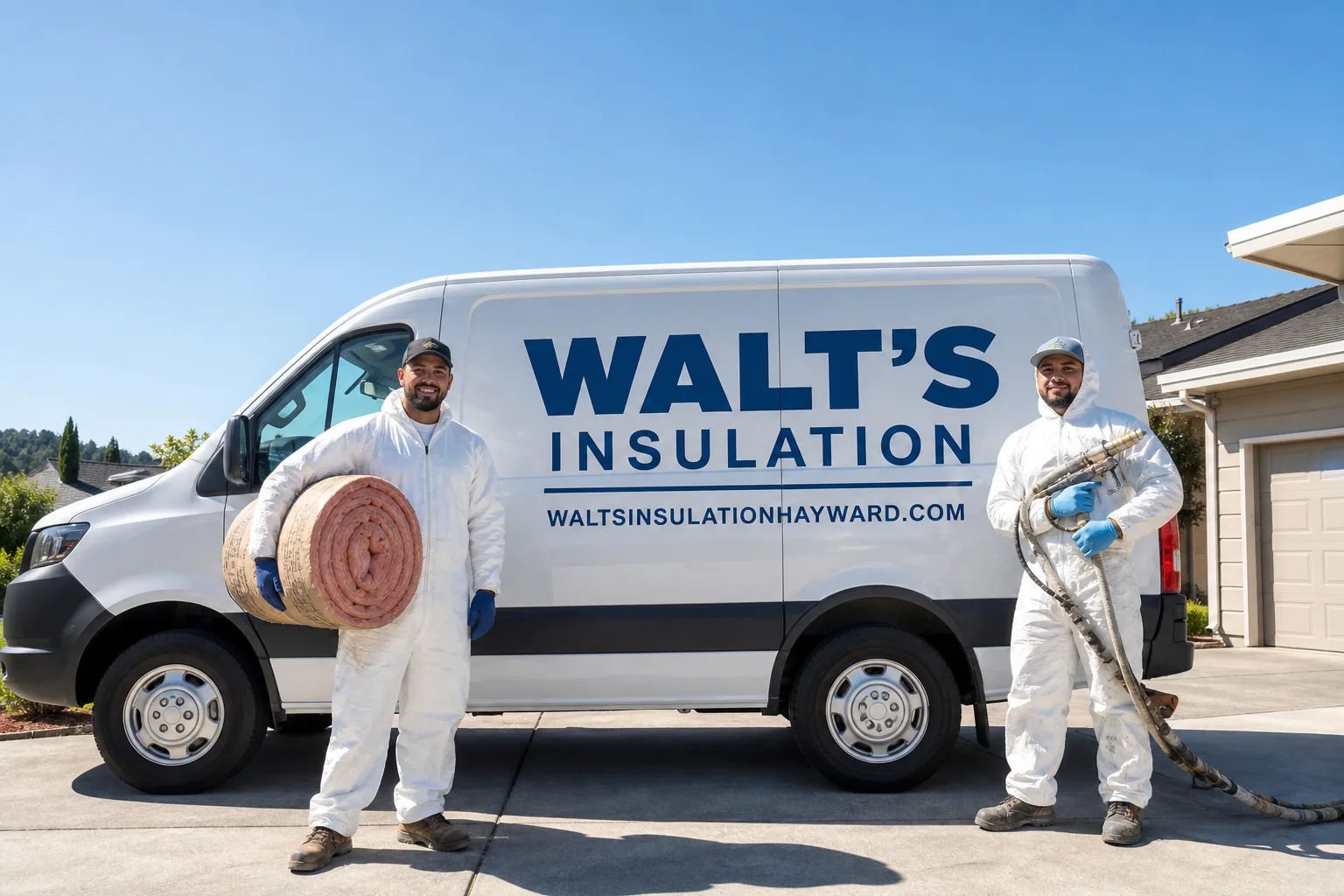
Fast, Reliable Crawl Space Encapsulation & Vapor Barrier Across Newark
Crawl space encapsulation in Newark typically runs $4,800-$9,200 for a full system on a standard 1,200-1,600 sq ft ranch, and most jobs are completed in one to two days. If you’re smelling musty air drifting up through your floors or seeing condensation on ductwork under the house, the bay-fill soil and Dumbarton wind corridor are working against you. Walt’s Insulation has been fixing crawlspaces in Newark since 2000, and we answer the phone live, 24/7. Call (510) 871-9022 and we’ll send a background-checked technician to your door, no trip charge inside the county.
Key Takeaways for Newark Homeowners
- Newark’s Dumbarton wind corridor and former salt-pond bay-fill land mean west-facing crawlspaces fail faster than homes just a few blocks east.
- A standard 6-mil plastic sheet on the ground is not enough for most Newark homes. You need sealed seams, piers wrapped, and air-sealed rim joists.
- Full crawl space encapsulation in Newark starts around $4,800 and combines a reinforced vapor barrier with rim-joist air sealing and often a dehumidifier.
- Walt’s Insulation is locally owned and owner-operated, backs every job with a lifetime Done Right Promise, and never routes your call to a call center.
Why Walt’s Insulation Is Newark’s Preferred Crawl Space Encapsulation & Vapor Barrier Company
We’re not a franchise with a rotating cast of subcontractors. Walt Brenner started this company in 2000 and still runs it with a published address and a license number you can look up. When a Newark homeowner calls, a live person picks up. Not a voicemail. Not an answering service. That matters when your crawlspace is flooding at 9 p.m. and you need to know if it can wait until morning.
Our crews know Newark’s housing stock because we’ve crawled under hundreds of these 1960s-1980s ranches. We know that a house on Willow Street has a different moisture profile than one on Cherry Street, even when they’re only a few blocks apart. We know the bay-fill lots on the west side behave differently than the older soil east of Thornton Avenue. That local knowledge changes the spec we write for your vapor barrier, your rim-joist sealing, and whether you need a dehumidifier or not.
Newark customers also get our standing offers: $40 off any repair over $200, a free second opinion on any written estimate, no trip charge inside Alameda County, and a permanent 10% senior and veteran discount. Every job is covered by the Done Right Promise. If it’s not done right, we make it right.
Our Crawl Space Encapsulation & Vapor Barrier Services in Newark
Most Newark homes need more than a sheet of plastic on the dirt. Here’s what we actually do under your house. Our Crawl Space Encapsulation & Vapor Barrier team treats every job as a system, not a single product.
Crawl Space Vapor Barrier
In Newark, a crawl space vapor barrier has to hold up against wind-driven pressure fluctuations that most of the Bay Area never experiences. Along the Dumbarton approach, air moves through west-facing vents and rim joists hard enough to balloon and tear a flimsy 6-mil sheet. We install 12-mil reinforced poly with taped seams, run it up the foundation walls, and mechanically fasten it so it stays put. That’s the difference between a barrier that lasts 20 years and one that fails in two.
Crawl Space Encapsulation
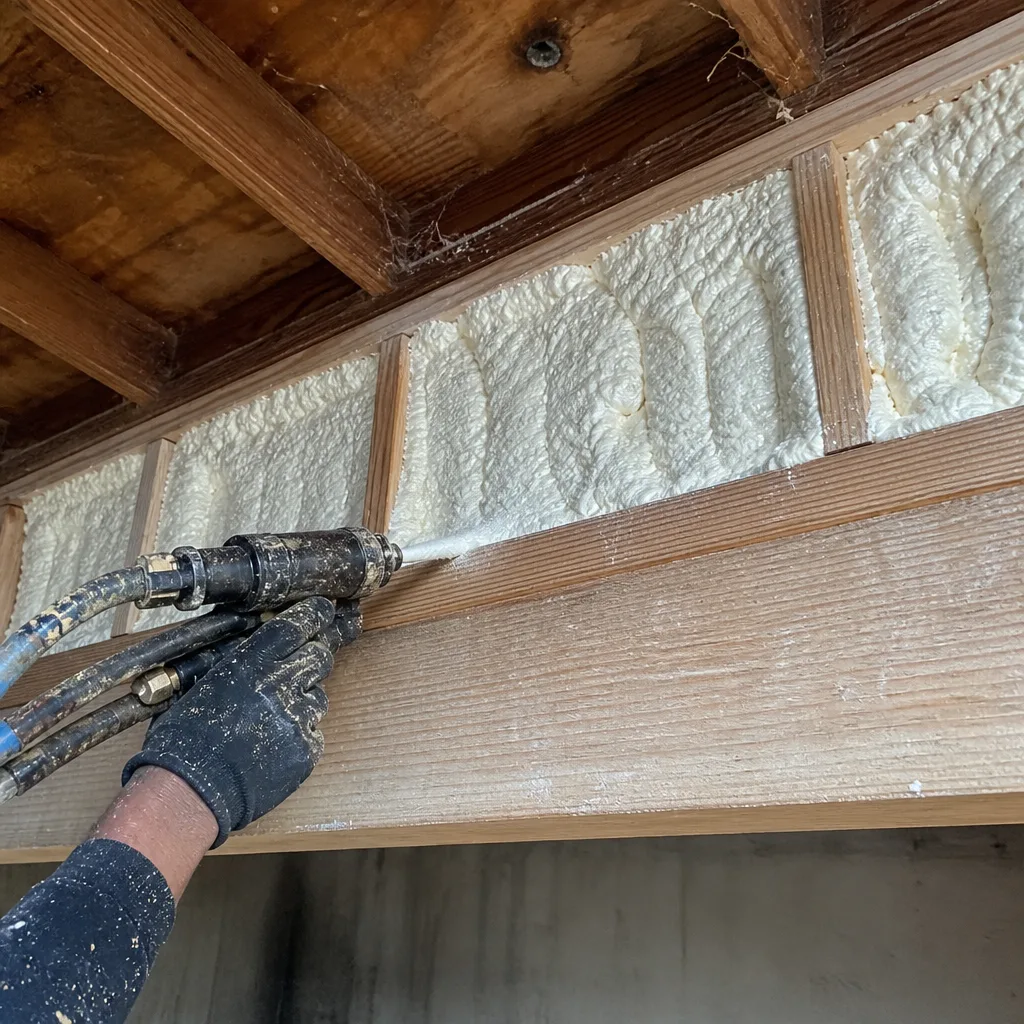
Full encapsulation seals the entire crawlspace: vapor barrier on the floor and up the piers, closed-cell spray foam or rigid board on the rim joists and foundation walls, sealed vents, and a properly sized dehumidifier. For Newark homes on former Cargill salt-pond land, this is the only reliable fix. The soil continuously wicks moisture upward. Without encapsulation, you’re fighting a losing battle with condensation, mold, and rot.
Crawl Space Insulation
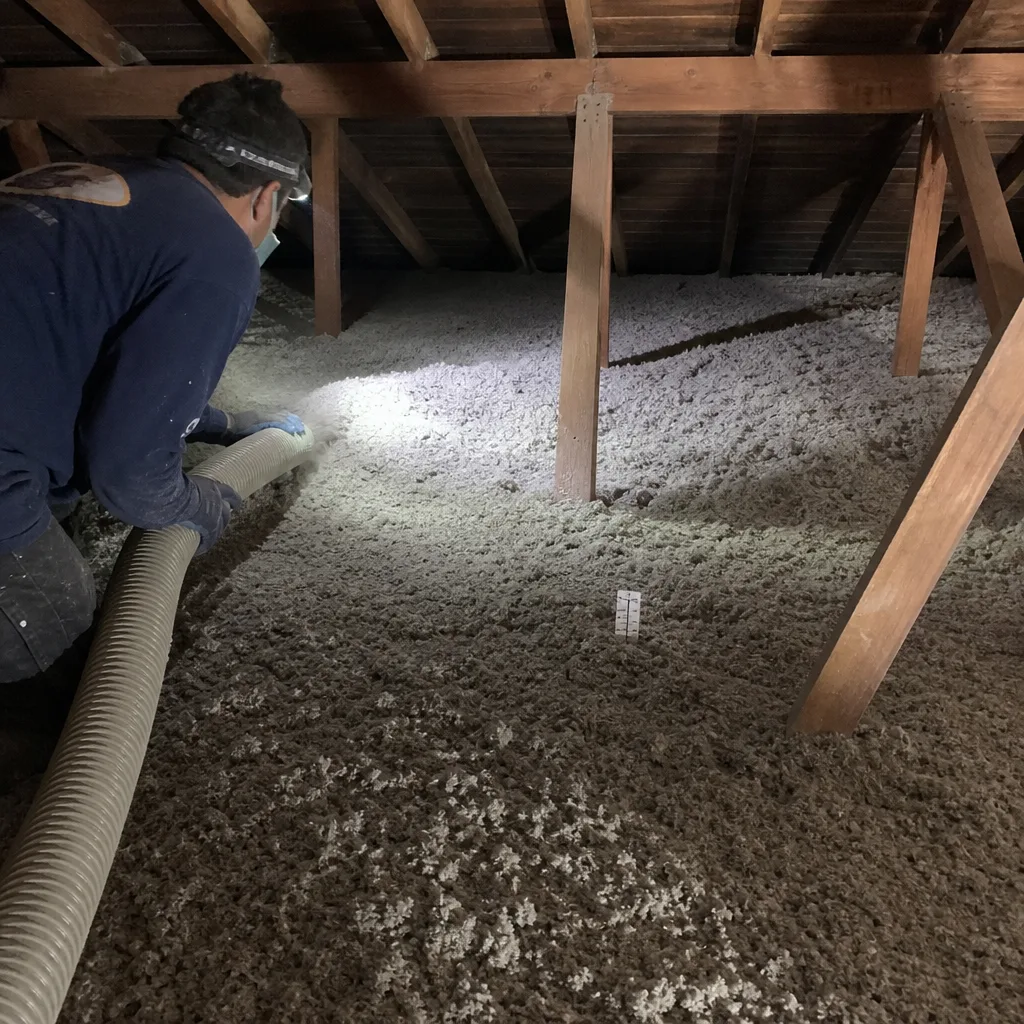
Fiberglass batts in a Newark crawlspace, especially on the west side near the Dumbarton corridor, sag and wick moisture within a few seasons. We remove failed insulation and replace it with closed-cell spray foam or rigid foam board that won’t absorb water. When paired with a proper vapor barrier, crawl space insulation actually holds its R-value for the life of the home.
Crawl Space Moisture Control
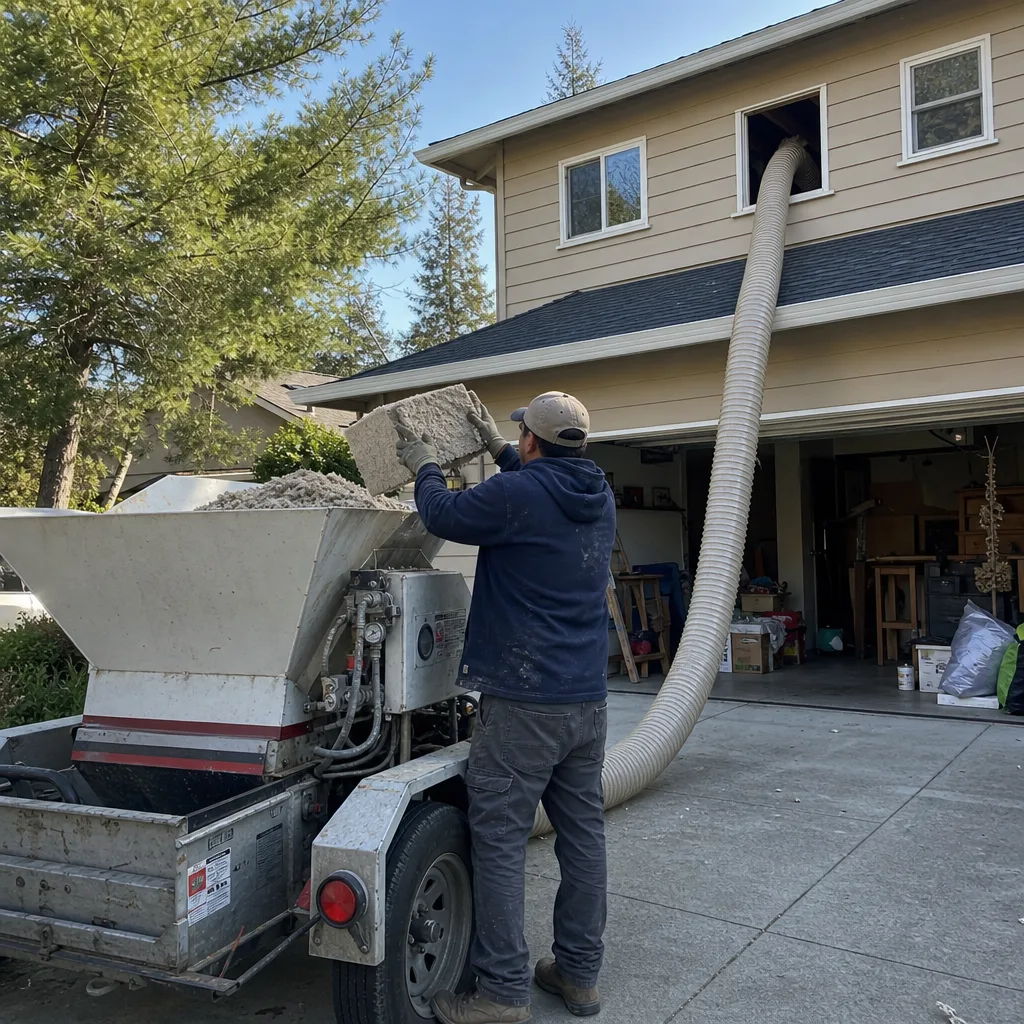
Newark’s overnight humidity regularly tops 80%. A vented crawlspace here will condense water on ductwork and floor framing even in July. We install sealed encapsulation systems along with dehumidifiers sized for the steady moisture release from bay-fill soil. The goal is to keep your crawlspace below 55% relative humidity year-round, which is the threshold where mold stops growing and wood stops rotting.
What happens when you call
- 1
A real person answersNo phone trees - you reach a local pro.
- 2
You get an upfront price rangeHonest numbers before anyone is dispatched.
- 3
A background-checked tech heads outLicensed & insured, dispatched right away.
- 4
You approve before work beginsNothing starts until you say go.
Trusted Brands We Service in Newark
We stock and install products from Knauf, Rockwool, and CertainTeed, depending on what your specific crawlspace needs. For rim-joist air sealing on Newark’s wind-battered west side, we use closed-cell foam that can handle the sustained pressure differential. For insulation batts where appropriate, Knauf and Rockwool both make moisture-resistant products that outperform the old fiberglass that came with your 1970s ranch. Because we carry inventory locally, turnaround on most Newark jobs is measured in days, not weeks.
Common Crawl Space Encapsulation & Vapor Barrier Problems We See in Newark Homes
- Sagging, waterlogged fiberglass batts on bay-fill lots. The former salt-pond land under western Newark continuously wicks moisture upward. Fiberglass insulation installed in these crawlspaces saturates and collapses within a few seasons, losing its R-value and inviting mold. We remove it and replace with closed-cell foam or rigid board.
- Wind-torn vapor barriers near the Dumbarton corridor. Homes along the Willow Street and Cherry Street corridors experience wind-driven air pressure that lifts and tears unsealed 6-mil poly. We see this constantly. The fix is a 12-mil reinforced barrier with taped, mechanically fastened seams.
- Condensation on ductwork and floor framing even in summer. Newark’s marine-layer humidity doesn’t take the season off. In a vented crawlspace, overnight moisture condenses on cool duct surfaces and framing. This is a venting problem, not a plumbing leak. Encapsulation with a dehumidifier solves it permanently.
- Directional moisture damage on west-facing foundation walls. The wind channel through the Dumbarton gap pushes humid, salt-laden air into west-facing rim joists and vents harder than anywhere else in the East Bay. Homes on the west side of Newark show dramatically higher air-leakage and moisture damage on their bay-facing walls than their east-facing neighbors. This pattern is why we spec different air-sealing on different sides of the same house.
Pricing for Crawl Space Encapsulation & Vapor Barrier in Newark, CA
Here’s what Newark homeowners can expect to budget:
- Crawl space vapor barrier only (12-mil reinforced, sealed seams, up piers): $2,200-$4,100 for a standard 1,200-1,600 sq ft crawlspace.
- Full crawl space encapsulation (barrier + rim-joist air sealing + dehumidifier): $4,800-$9,200 depending on access, crawlspace height, and whether we’re removing failed insulation.
- Crawl space insulation replacement (spray foam on rim joists or foam board on walls): $1,400-$3,800 as part of a larger encapsulation job.
- Crawl space cleanout and debris removal: $600-$1,500 if the space is filled with old insulation, construction debris, or rodent waste.
What moves the price: crawlspace height (if we’re belly-crawling, it costs more), whether old fiberglass needs to be removed and disposed of, and the condition of your rim joists. Wind-damaged rim joists near the Dumbarton approach often need more foam than a sheltered interior lot. Every quote is upfront and line-itemed. Call (510) 871-9022 and we’ll come out free, no trip charge in the county, and give you a written number you can hold us to.
We Also Serve Cities Near Newark
If you’re in Union City, Sunol, Palo Alto, or Milpitas, we handle Crawl Space Encapsulation & Vapor Barrier in Newark and the surrounding area with the same live-answer, same-crew service. Our techs dispatch from the San Francisco Bay Area and serve Newark locally, which means we can often reach neighboring communities the same day you call.
Serving Newark, CA - Our Local Coverage Area
We’re based in the Newark area and know this community well. Use the map below to see our service coverage - if you’re nearby, we can almost certainly help.
FAQs - Crawl Space Encapsulation & Vapor Barrier in Newark
The Dumbarton wind corridor funnels prevailing bay breezes through the gap between the Diablo Range foothills and the bay’s edge, hitting west-facing crawlspace vents and rim joists with sustained pressure that homes east of Thornton Avenue never feel. That wind carries salt-laden, high-humidity air directly off the South Bay. It pushes through unsealed vents and rim joists, condenses on cool floor framing, and soaks exposed fiberglass insulation. Homes just a few blocks east, sheltered from the direct wind channel, show measurably lower air-leakage rates and less crawlspace moisture. This directional pattern is something we see almost every week in Newark, and it’s why the west side of your house gets a different air-sealing spec than the east side. Call (510) 871-9022 for a free assessment.
No, and here’s the specific reason: wind-driven air pressure along the Dumbarton approach balloons and tears unsealed 6-mil poly within one to two seasons. We see it constantly on west-facing homes near Willow Street. A 12-mil reinforced vapor barrier with taped seams and mechanical fastening is the minimum we install in Newark. The material cost difference is modest. The failure cost difference is thousands in re-soaked insulation and repeated mold treatment. Call (510) 871-9022 and we’ll show you what’s under your house right now.
Remove the fiberglass and don’t put it back. The bay-fill soil under western Newark wicks moisture upward continuously, and fiberglass batts absorb that moisture, sag, and lose their R-value within a few seasons. We replace failed batts with closed-cell spray foam on the rim joists and rigid foam board on foundation walls. These materials don’t absorb water and maintain their insulating value even in a damp crawlspace. Paired with a full vapor barrier and a properly sized dehumidifier, this is the only combination that holds up on former Cargill salt-pond land. Call (510) 871-9022 for a free crawlspace inspection.
The wind corridor creates sustained air-pressure differentials that pull outside air through any unsealed gap in your crawlspace envelope. If your encapsulation system leaves rim joists unsealed or vents open, the wind will pump high-humidity, salt-laden air into the crawlspace faster than a dehumidifier can remove it. That’s why we treat air sealing as the first step in every Newark encapsulation, especially on the west side. Closed-cell spray foam on rim joists and sealed vents are non-negotiable here. We also size dehumidifiers for the steady moisture release from bay-fill soil, not just the crawlspace square footage. Call (510) 871-9022 for a spec written for your specific lot.
Yes, and the reason is the soil. Newark homes on former Cargill salt-pond bay-fill land sit on soil that continuously releases moisture upward through the ground. Encapsulation stops most of that, but the steady wicking means ambient humidity in an encapsulated crawlspace will still creep up over time without a dehumidifier. On Willow Street ranches from the 1970s, we regularly find that a dehumidifier is the difference between a crawlspace that stays below 55% relative humidity during summer fog events and one that drifts back up into mold-growth territory. We size the unit for the soil’s moisture release rate, not just the square footage. Call (510) 871-9022 for an exact recommendation.
Written by Walt Brenner, Owner at Walt’s Insulation, serving Newark since 2000. The one down the road.