
Rockwool Radiant Barrier Installation: The Hayward Owner’s Guide
Radiant barrier installation over Rockwool insulation in Hayward typically runs $1.50 to $3.25 per square foot installed, with most single-story homes landing between $1,800 and $4,200 total depending on attic size and access. We stock Rockwool-compatible radiant barrier material on our trucks and can usually complete the job same-day or next-day. Most Hayward homeowners discover they need this work after walking into a bedroom upstairs on an August afternoon and realizing it’s 15 degrees hotter than the living room downstairs, or after opening a July electric bill from PCE that’s nearly double what it was in May.
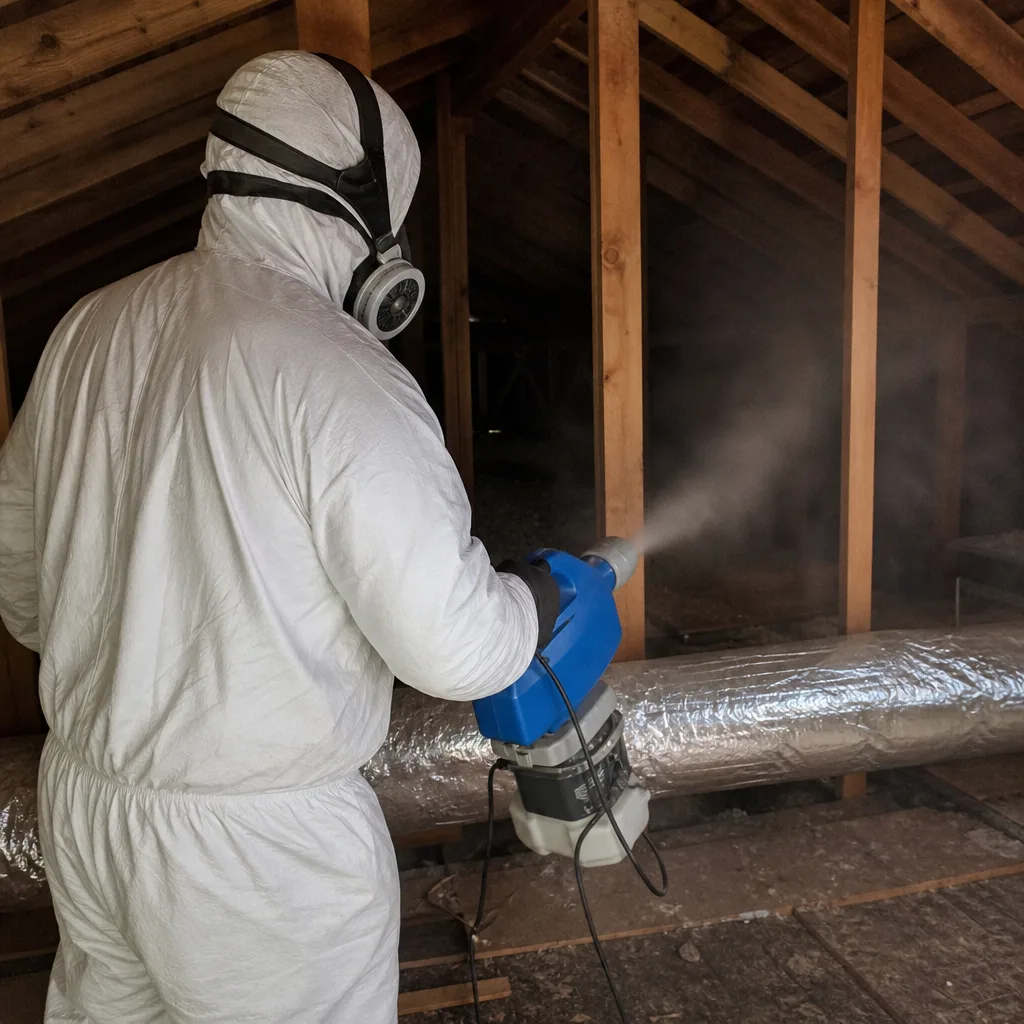
Walt Brenner and our crew have been installing radiant barrier over Rockwool in Hayward attics since 2000, and the pattern is always the same: the Rockwool is doing its job slowing conductive heat, but nothing is stopping the radiant heat from baking through the roof deck and into the insulation itself. Once that happens, the Rockwool hits its thermal capacity and the heat bleeds into the living space. A properly installed radiant barrier stops that heat before it ever reaches the Rockwool.
Which Rockwool Models This Applies To
Radiant barrier works above any Rockwool batt or loose-fill product, but the installation details change depending on what you’ve got up there. We see three configurations in Hayward homes most often:
- Rockwool Comfortbatt (R15, R23, R30): Used in cathedral ceilings and knee walls. Radiant barrier gets stapled to the underside of the roof deck above the batts, leaving the required air gap.
- Rockwool Safe’n’Sound (fire and sound batts): Common in interior walls and between floors in Hayward townhomes. Radiant barrier rarely applies here unless there’s a specific solar gain issue. We’ll tell you honestly if you don’t need it.
- Rockwool blown-in loose fill: The most common Hayward attic setup. Radiant barrier goes on the roof deck and gable walls, trapping the air gap above the loose fill where ventilation does its work.
The compatibility gotcha most owners miss: radiant barrier requires a minimum 3/4″ air gap on one side to function. If it’s installed flat against a surface with no gap, it becomes nothing more than a reflective sheet with an R-value barely above zero. We’ve walked into Hayward attics where a previous installer stapled radiant barrier directly to the top of the Rockwool batts, effectively turning it into an expensive vapor retarder. That’s a common failure point, and it’s the first thing we check. We’re an independent installer, not affiliated with Rockwool, but we’ve worked with their products for over 25 years and know exactly how radiant barrier should sit in relation to their batts and loose fill.
Signs Your Rockwool Radiant Barrier Installation Is Failing
- Rooms directly under the roof are 10 to 15 degrees hotter than the rest of the house. This usually means the radiant barrier has detached from the roof deck or was never installed with the proper gap. Rockwool alone, even at R38, cannot handle the full radiant load of a Hayward summer.
- Visible tears, sagging, or fallen sections in the attic. Cheap foil without a reinforced scrim backing degrades quickly in the heat and humidity of an unventilated East Bay attic. Once it sags, it touches the insulation below and loses its reflective function.
- Dust-caked foil surface. Radiant barrier works by reflecting, not absorbing. A layer of dust cuts reflectivity by up to 40%. The fix is simple and costs less than you think.
- Condensation on the underside of the roof deck in winter. A tore or improperly lapped radiant barrier can actually trap moisture against the roof deck, and in Hayward’s cool, damp winters that causes mildew and staining.
- Your AC runs continuously from 3pm to sunset on summer days. If the attic is 130 degrees at 4pm, all that heat is pushing down through your Rockwool and into whatever ceiling is under it. No amount of R-value fixes a radiant load problem.
Replacement Cost & What’s Included
Give or take for Hayward homes, installed pricing runs $1.50 to $3.25 per square foot of attic floor area. A 1,500 square foot single-story home puts you in the $2,250 to $4,875 range. A 1,000 square foot condo or townhouse attic will typically run $1,500 to $3,250. Two-story homes with sloped rooflines and limited attic access run higher because of labor time and safety setup.
Every quote includes the material (a double-sided foil with woven scrim reinforcement, which stands up to East Bay attic temperatures far better than single-layer foil), professional installation with proper overlap and air gap, debris cleanup, and our Done Right Promise: if it’s not installed right, we make it right. That’s not a warranty card and an 800 number. That’s a written promise from a company whose owner is reachable and whose address is on the estimate. We also work with Reflectix products for retrofit applications where that’s the better fit for the space.
DIY or Call Us?
You can absolutely check what’s going on up there: whether the foil is torn, sagging, or dust-caked, and whether it’s installed with the proper air gap above the Rockwool. If you’re comfortable on a ladder and your attic has a real floor and decent headroom, a visual inspection is doable. What we’d steer you away from is a full DIY install in a tight Hayward attic: working over exposed joists in 120-degree heat, handling long rolls of foil in cramped spaces, and getting the overlap and gap right under a low roof deck is a real risk. Falls through ceilings are the number one DIY attic injury, and the medical bill will dwarf what we charge.
Our crew does this in Hayward attics every week, with proper PPE and knee boards. A typical install takes us 4 to 6 hours, and you’ll notice the difference the same afternoon. Call us at (510) 871-9022 and we’ll come out and give you an honest assessment. And if you already have a written estimate from another company, bring it. We’ll give you a second opinion free, no strings.
FAQs
In this climate, quality double-sided scrim-reinforced radiant barrier installed correctly over Rockwool will last 15 to 25 years. The two things that shorten its life here: poor attic ventilation, which bakes the foil in trapped heat and breaks down the material faster, and installers using single-layer foil, which starts tearing in a couple of seasons. Call (510) 871-9022 and we’ll tell you honestly whether yours is still doing its job or just sitting there.
If a small section has torn or detached, yes, patching is fine and that’s what we recommend for anything under roughly 25% of the total area. The issue is that once one section fails, rest rarely far behind, especially if the original install was single-layer foil. We’ll give you a straight answer on whether repair makes sense or if you’re spending good money over bad.
Most Hayward attics take 4 to 6 hours from setup to cleanup. Larger homes with complex roofs or debris removal can go a full day, but we never leave a job half-done, and the quote we give you is the price you pay unless we hit something genuinely unexpected and talk to you about it first. If you call and we have a crew open that same day, you’ll have it installed that same day.
Yes. We carry double-sided scrim-reinforced radiant barrier on our trucks year-round, plus Reflectix for specific retrofit applications. If your job calls for something we don’t have on hand, we’ll get it that day or the next. Call (510) 871-9022 for an exact quote. Estimates are free, and there’s no trip charge anywhere in our service county.
Written by Walt Brenner, Owner, Walt’s Insulation at Walt’s Insulation, serving Hayward and nearby areas.