
Rockwool Attic Air Sealing: The Hayward Owner’s Guide
Rockwool attic air sealing in Hayward typically runs $1,200 to $2,800 installed, depending on attic size, accessibility, and how much existing insulation needs to be moved or replaced. We stock Rockwool-compatible sealing materials on our trucks and can usually complete the job same-day or next-day. Most Hayward homeowners discover their air sealing has failed when energy bills spike in July and August, or when a bedroom over the garage stays 10 degrees warmer than the rest of the house no matter how long the AC runs.
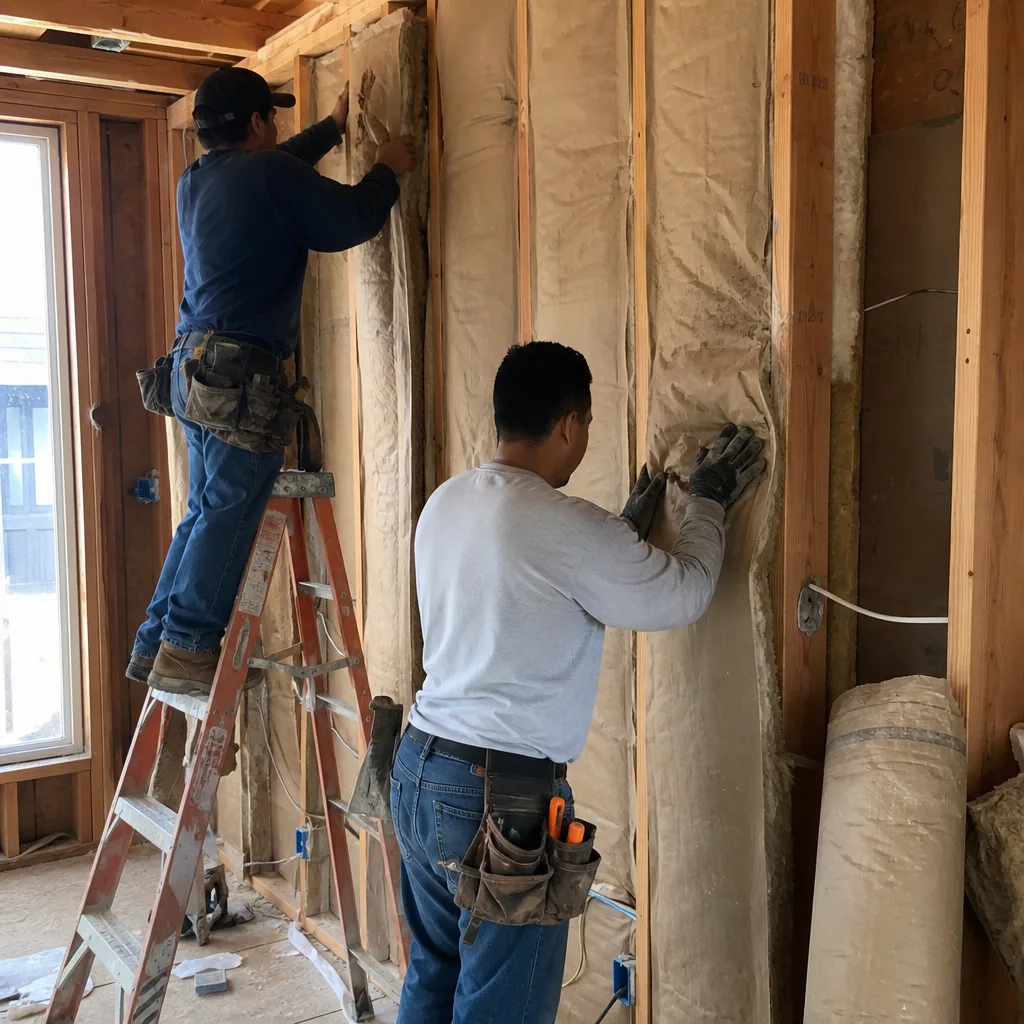
Here’s the thing about Rockwool that matters for air sealing: the insulation itself is doing half its job if air is moving through it. Rockwool’s stone wool batts and boards are dense and fire-resistant, but they don’t stop airflow. That’s what the air sealing layer is for. In Hayward’s marine-influenced climate, where we get morning fog off the bay and dry heat in the afternoons, that air movement pulls moisture and heat straight through your ceiling. Walt Brenner has seen attics in the Burbank and Whitman neighborhoods where homeowners paid for premium Rockwool insulation and got maybe 60% of its rated performance because nobody sealed the penetrations first.
Key Takeaways:
- Rockwool air sealing pairs the stone wool you already have with proper penetration sealing, can lights, top plates, and attic hatch gasketing
- We’re an independent Hayward contractor, not affiliated with Rockwool, but we install and service their products daily
- Same-day and next-day appointments available, live person answers the phone 24/7
- Every job is covered by our lifetime Done Right Promise
Which Rockwool Models This Applies To
Rockwool doesn’t make a single “air sealing product.” What you have in your Hayward attic is likely one of three things: Rockwool Comfortbatt (the semi-rigid batts in R-15, R-23, or R-30), Rockwool Safe’n’Sound (the denser acoustic batts usually found in interior walls, occasionally used in attics for sound dampening), or Rockwool Comfortboard 80 (rigid boards used on attic kneewalls and roof decks). The air sealing layer is what goes under and around these products, and the compatibility question is less about “which model” and more about how the Rockwool was installed originally.
Here’s the compatibility gotcha most Hayward homeowners run into: if your original installer used Rockwool batts in rafter bays without sealing the top plates and can light housings first, the batts are still good but the system failed. You don’t necessarily need to replace the Rockwool. You need the sealing layer done correctly. On the OEM versus aftermarket question: Rockwool doesn’t sell a proprietary sealant or foam. The right materials are commercial-grade products like fire-rated spray foam (we use Touch’n Seal and Versi-Foam systems), aluminum tape rated for ductwork, and rigid foam board cut to fit. The skill isn’t the brand name on the can, it’s knowing where air actually leaks in a Hayward house: recessed lights, bathroom fan housings, plumbing stack penetrations, electrical wire penetrations through top plates, the attic hatch, and the gap where drywall meets framing.
If your Rockwool batts are compressed, water-stained from a roof leak, or chewed through by rodents, that’s a different job, and we’ll tell you straight before quoting anything.
Signs Your Rockwool Attic Air Sealing Is Failing
- Uneven room temperatures between floors or across the same floor. Air sealing failures show up as temperature differences. If your upstairs hallway is 78 while the living room is 72, conditioned air is escaping somewhere and unconditioned attic air is replacing it.
- Dust accumulating faster than it should, especially around can lights and ceiling fixtures. Attic air carries fine particulate from insulation, roofing debris, and the outdoors. When sealing fails, that dusty air gets pulled down through gaps around light fixtures and vents.
- A persistent musty or stale smell in certain rooms during Hayward’s foggy mornings. Moisture-laden air from the attic gets drawn into the living space when negative pressure from exhaust fans or the furnace pulls it through unsealed penetrations.
- Higher PG&E bills with no obvious cause. If your summer cooling costs climbed 20-30% over two years and your AC unit checks out fine, air leakage is usually the culprit. In Hayward’s mild climate, this is often the single biggest energy waste in older homes.
- Cold drafts near the attic hatch or ceiling light fixtures in winter. Hayward winters are mild by national standards, but on a 40-degree January night you can feel air moving around an unsealed hatch. That’s attic air coming straight down into your living room.
Replacement Cost & What’s Included
In Hayward, a full Rockwool attic air sealing job runs $1,200 to $2,800 installed. A smaller single-story ranch with straightforward attic access and minimal penetrations lands at the lower end. A larger two-story home with recessed lighting throughout, multiple bathroom fans, and an attached garage attic space runs higher.
Here’s what that price includes in our quotes, no hidden line items:
- Full inspection of the attic perimeter: top plates, can light housings, fan boxes, plumbing and electrical penetrations, chimney chase, and attic hatch
- Sealing all penetrations with fire-rated foam or caulk rated for the application
- Building and weatherstripping the attic hatch or installing an insulated hatch cover
- Air sealing around recessed light housings (IC-rated fixtures only, which the code requires if they’re in contact with insulation)
- Re-setting or fluffing existing Rockwool batts where we had to move them to access penetrations
Parts and labor are itemized separately, so you see exactly what you’re paying for. And every job is covered by the Done Right Promise: if it’s not done right, we make it right, no runaround. That’s a lifetime workmanship guarantee from a locally owned Hayward-area company that’s been doing this since 2000, not a franchise that’ll be gone in five years.
We also carry Reflectix radiant barrier products if you’re looking to address heat gain in the same visit.
DIY or Call Us?
Here’s the honest split. You can safely inspect your attic hatch: open it, run your hand around the edges on a cold morning, and feel for moving air. You can look at whether existing Rockwool batts are sitting flat and covering the ceiling joists. You can check if you see daylight around vent pipe penetrations. What you shouldn’t DIY is the sealing itself. Working in a Hayward attic in summer means surface temperatures well over 110 degrees, tight clearances, and the risk of stepping through the ceiling if you don’t know where the joists are. We’ve repaired homeowner attempts that used the wrong foam (window-and-door foam, which expands too aggressively and bows drywall) or sealed over non-IC-rated can lights, which is a fire hazard.
If you’ve got Rockwool in your attic and it’s not performing, the sealing layer is almost always the issue. Call us at (510) 871-9022 and we’ll come out, inspect it, and give you a straight answer and an upfront price. No trip charge inside our service county, and we offer a free second opinion on any written estimate you’ve already received.
FAQs
Properly installed air sealing with fire-rated foam and caulk lasts 20 to 30 years in Hayward’s climate, though settling and new penetrations (a new bathroom fan, a satellite dish cable run) can create new leaks over time. We recommend re-checking your attic sealing every five years, especially after any roof work or electrical upgrades. Call (510) 871-9022 if you want us to take a look.
Spot repairs work when the failure is localized, like one leaky can light or a shifted attic hatch gasket. If the original sealing was never done properly or has degraded across multiple penetrations, a full re-seal is more cost-effective than chasing individual leaks. We’ll assess what’s actually needed and quote you accordingly, not upsell you. Estimates are free.
Most Hayward homes take four to seven hours for a complete attic air sealing job, including moving Rockwool batts aside, sealing, and re-setting them. Larger homes or attics with heavy rodent damage to insulation may take a full day. We can usually schedule same-week, and often same-day if you call early.
Yes. Our trucks carry commercial-grade fire-rated foam, acoustic caulk, aluminum tape, rigid foam board, and attic hatch weatherstripping, so we don’t have to make a supplier run before starting your Hayward job. If your existing Rockwool batts need replacement in spots, we stock Comfortbatt in common R-values and can source anything unusual by the next business day. Call (510) 871-9022 for a free estimate and a straight answer on your specific attic.
Written by Walt Brenner, Owner, Walt’s Insulation at Walt’s Insulation, serving Hayward and nearby areas.