
Owens Corning Vapor Barrier Installation: The Hayward Owner’s Guide
Owens Corning vapor barrier installation in Hayward typically runs $1.50 to $3.25 per square foot installed, depending on whether we’re sealing a crawl space, basement wall, or under-slab area. We stock Owens Corning-compatible vapor barrier materials on our trucks, and in most Hayward neighborhoods we can be on-site within 24 hours. Most homeowners call us after noticing that musty crawl space smell creeping into the living room, or after a home inspector flags moisture wicking through an old, torn polyethylene sheet that’s been down there since the Clinton administration.
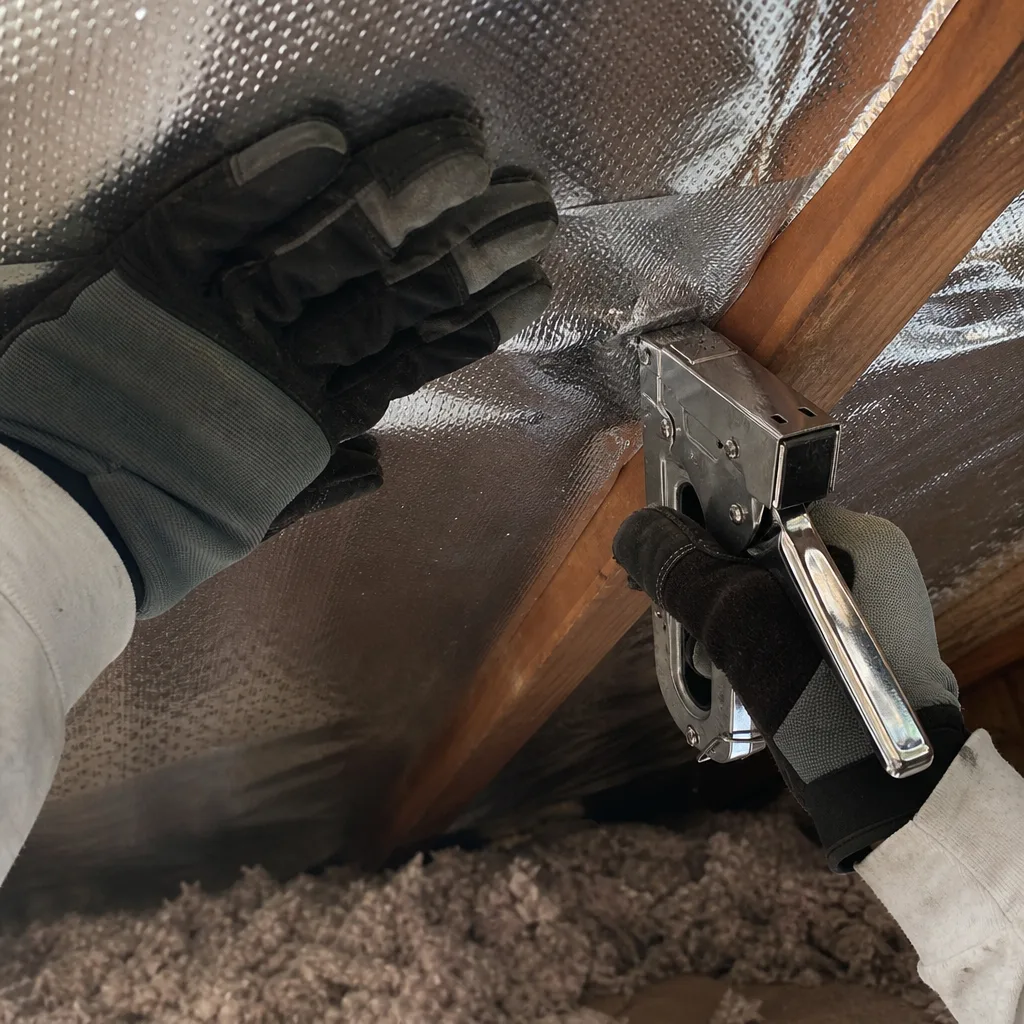
The frustrating part for most Hayward homeowners is that vapor barriers fail quietly. You don’t get a dramatic pop or a visible leak. You get damp insulation, a floor that feels colder than it should in December, and eventually, mold stains on floor joists. By the time you notice, the barrier underneath has usually been compromised for months. And here’s the thing about Hayward specifically: we’re close enough to the bay that our soil holds moisture year-round. A vapor barrier that might limp along in Arizona for a decade gives up much faster here. That’s not a design flaw in the Owens Corning product. It’s just physics and geography doing their thing.
Which Owens Corning Models This Applies To
When we talk about Owens Corning vapor barrier installation, we’re typically working with two product families. First, there’s the Owens Corning Foamular line: rigid foam board insulation that doubles as a vapor barrier in crawl space walls and basement applications, available in thicknesses from half-inch to two inches, with R-values running R-2.5 to R-10 depending on board thickness. Second, there’s the Owens Corning Propink and EcoTouch batt insulation products, which rely on a separate poly vapor barrier layer (typically 6-mil polyethylene) installed over the batts on the warm side of the wall or floor assembly. If you’re looking at a roll of 6-mil clear poly with Owens Corning branding, that’s the accessory barrier, and it mates with either product line.
The compatibility gotcha we see constantly in Hayward: Owens Corning Foamular XPS board requires specific sealing tape and adhesive, and using generic duct tape or roofing sealant will cause the seams to fail within two or three years. XPS foam reacts with solvent-based adhesives, which eat the foam and leave you with gaps exactly where you don’t want them. We carry the correct compatible tape and mastic on the truck. If you’re unsure which Owens Corning product you have, look for the printed product code on the foam edge or insulation facing: Foamular boards show a date code and thickness stamp, while Propink batts show the R-value printed on the kraft facing. If the facing is missing or the printing is worn off, take a photo of what you’ve got and call us; our crew can usually identify it from a picture in under a minute.
One more thing worth knowing on the OEM-versus-aftermarket decision: for vapor barrier poly sheeting, a quality 6-mil or 10-mil polyethylene from a manufacturer like Reflectix or a regional supplier performs identically to the Owens Corning-branded roll, because the material specification (ASTM E1745 for crawl space vapor barriers) is what matters, not the logo printed on the sheet. For Foamular board, we recommend staying with genuine Owens Corning product. That’s what it’s designed to do, and mixing foam board brands in a single wall assembly creates uneven thermal expansion that causes seam failure. We say that as an independent installer, by the way; Walt’s Insulation isn’t affiliated with Owens Corning, but we’ve installed their products for over two decades and know where their specs matter and where they don’t.
Signs Your Owens Corning Vapor Barrier Installation Is Failing
- Musty odor that gets stronger when the heat kicks on. A compromised vapor barrier lets soil moisture rise into your crawl space, where it soaks into fiberglass batts and the subfloor above. When your furnace runs, that damp, earthy smell gets pulled up into the living space through gaps around plumbing and electrical penetrations. This is the number-one complaint we hear in Hayward ranch homes built in the 1960s and 1970s.
- Condensation on crawl space walls or floor joists in the morning. If you shine a flashlight under the house and the joists look wet or the concrete walls have water beading on them, the barrier underneath has failed somewhere. Moisture is getting through, and it’s collecting on the coolest surfaces overnight. East Bay mornings are damp enough without your crawl space adding to it.
- Sagging or torn poly sheeting visible at the crawl space entry. You don’t need to crawl all the way under the house to spot trouble. Open the access door and look. If the plastic is pulled away from the foundation walls, ripped, or buried under displaced gravel, it’s not doing its job. Rodent traffic and just plain time do this. We see torn barriers in Hayward homes near the Hayward Japanese Gardens where the soil stays wetter longer than out toward the hills.
- Higher energy bills without a clear cause. Wet insulation loses most of its R-value. If your heating costs have crept up over the last couple of winters and you can’t point to a rate increase, damp insulation from a failed vapor barrier is a likely culprit. We’ve measured this in the field: fiberglass batt with 20% moisture content can lose over half its insulating capacity.
- Floor feels cold or damp in specific rooms. Rooms over a crawl space with a failed barrier will feel noticeably colder than rooms over a slab or a finished basement. Homeowners sometimes assume they need thicker carpet or new flooring. What they usually need is a proper barrier under the house, which is a lot cheaper than new flooring and actually fixes the problem.
Replacement Cost & What’s Included
For a typical Hayward crawl space between 800 and 1,200 square feet, a complete Owens Corning-compatible vapor barrier installation runs $1,200 to $3,900. That includes removal and disposal of the old barrier, ground preparation, new 10-mil or 12-mil polyethylene sheeting (or Foamular board where wall coverage is needed), seam taping, and sealing around all piers and perimeter walls. Smaller jobs, like re-lining a single wall section or repairing a tear along one foundation side, typically run $400 to $900. We always recommend 10-mil minimum for Hayward crawl spaces, and we’re honest with you if we think 6-mil is a false economy; it tears easier during installation, and it doesn’t survive rodent traffic as well.
What drives the range: access height (a 24-inch crawl space takes longer than a 40-inch one), debris removal if the old barrier is buried under construction waste or rodent droppings, and whether wall coverage is needed. Every quote includes the same thing: parts, labor, disposal, and the Done Right Promise, which covers our workmanship for life. If the barrier we install fails because of our installation, we make it right at no charge. That’s the whole promise. No fine print. No prorated nonsense.
Here’s the line-item breakdown for a typical 1,000 sq ft Hayward crawl space:
- Old barrier removal and disposal: $200-$400
- Ground prep and leveling: $150-$300
- 10-mil or 12-mil vapor barrier material: $300-$600
- Foamular wall board (if specified): $1.50-$3.25 per sq ft of wall area
- Seam tape, mastic, and pier sealing: $100-$250
- Labor: $450-$1,200 depending on access
We give upfront pricing before any work starts. Not an estimate range, not a “we’ll see how it goes” number. The price we quote is the price you pay, and if we find something unexpected underneath, we stop and call you before doing anything extra. Seniors and veterans get 10% off, always, and if you’ve got a written estimate from another company, bring it in; we’ll do a free second opinion and show you where the numbers actually shake out.
DIY or Call Us?
Let’s talk straight about what’s reasonable to do yourself and what isn’t. Checking your existing barrier is absolutely something a homeowner can do. Open the crawl space access, shine a light in, and look for tears, gaps at the foundation wall, or standing water. You can also check your floor registers for that musty smell we talked about earlier. None of that requires a professional, and I’ll always tell you to do the looking yourself before you pick up the phone. You’ll know what you’re dealing with, and you’ll be able to describe it to us accurately.
The actual installation is where I’d pump the brakes. Crawl space work in Hayward means working on your back or knees in tight quarters, often in spaces with animal droppings, old fiberglass, and uneven ground. Cutting and fitting 10-mil poly around piers and plumbing cleanly requires experience; a badly sealed seam or a gap around a pier means moisture gets through, and you’ve spent a weekend doing work that doesn’t work. The material also gets slippery when wet, which it will be, because you’re installing it over damp soil. If you still want to attempt it, at minimum wear a respirator, knee pads, and gloves, and make sure someone knows you’re under the house. But if the barrier has failed badly enough that you’re researching replacement, the fix usually involves more than re-laying plastic. Call (510) 871-9022 and we’ll tell you honestly whether it’s a simple re-line or a full replacement.
FAQs
A properly installed 10-mil or 12-mil vapor barrier in a Hayward crawl space typically lasts 15 to 20 years before it needs replacement. Thinner 6-mil poly often tears within 5 to 8 years due to rodent activity and foot traffic during plumbing or HVAC service. The lifespan depends more on installation quality and pest pressure than on the barrier material itself, which is why seam sealing and pier wrapping matter as much as the sheet thickness. If you’re not sure whether yours is still functioning, we’ll check it during a free estimate.
Yes, in many cases a vapor barrier can be repaired rather than fully replaced, especially if the damage is limited to one section or a few tears. We can overlay new poly over the damaged area, seal all seams with compatible tape, and verify the repair with a moisture inspection. Repairs typically run $400 to $900 depending on the extent of damage and access. If the barrier is torn in multiple places or has pulled away from the foundation entirely, replacement is usually the better long-term value, and we’ll tell you so rather than selling you a repair that won’t hold.
A typical Hayward crawl space vapor barrier installation takes one day for most homes up to 1,500 square feet. Larger homes or spaces with significant debris removal, rodent remediation, or wall coverage with Foamular board can take two days. We show up with a full crew and all materials on the truck, so there’s no mid-job run to the supply house. We’ll also tell you upfront how long your specific job will take when we come out for the estimate.
Yes, we keep Owens Corning Foamular board in common thicknesses, Owens Corning-compatible vapor barrier poly in 6-mil, 10-mil, and 12-mil, and all the seam tape and sealing mastic on our trucks. We also stock Reflectix barrier products for specific applications where a reflective layer adds value. Because we’ve been installing Owens Corning products in Hayward since 2000, we know which materials pair correctly with your existing setup and we won’t sell you something that doesn’t belong in your house.
Call Walt’s Insulation for Straight Answers
If your vapor barrier is failing, don’t let it go another season. Moisture under the house doesn’t fix itself; it gets worse, and it takes your insulation, your framing, and eventually your air quality down with it. We’re the one down the road: locally owned, owner-operated since 2000, with a published address and a license number you can look up. We answer the phone live 24/7 because your attic doesn’t keep business hours, and nobody wants to leave a voicemail about a crawl space. Call (510) 871-9022 for a free estimate. No trip charge in our service county. If you’ve already got a written estimate from someone else, bring it in and we’ll give you a free second opinion. We’d rather you know the truth than overpay, whether you hire us or not.
Written by Walt Brenner, Owner, Walt’s Insulation at Walt’s Insulation, serving Hayward and nearby areas.